





What Is IRA Silver? Definition and Legal Framework
A self-directed individual retirement account holds IRA silver — physical coins and bars meeting IRS fineness standards — under Internal Revenue Code §408(m). The IRS allows silver, gold, platinum, and palladium to be held in IRAs — provided they meet specific fineness standards and are stored at an IRS-approved depository, never at home.
How IRA Silver Works (Step by Step)
When you open a silver IRA, a qualified custodian opens and administers the self-directed account on your behalf. You fund it via rollover, transfer, or annual contribution. The custodian then purchases IRS-approved silver from an authorized dealer and arranges insured shipment to an approved depository. You own the metal; the custodian holds it in trust. All tax reporting (Form 5498, Form 1099-R) is handled by the custodian.
Which Metal Is Known as Poor Man's Gold?
Silver is widely called the "poor man's gold" because it provides similar inflation-hedging and store-of-value properties as gold, but at a much lower per-ounce price (approximately $30–$35 per ounce in 2026 vs. $2,800–$3,200 for gold). This makes silver accessible to a broader range of investors, particularly those opening a precious metals IRA with smaller account balances or limited starting capital.
Traditional vs. Roth Silver IRA
A traditional silver IRA accepts pre-tax contributions; withdrawals are taxed as ordinary income after age 59½. Required minimum distributions (RMDs) begin at age 73. A Roth silver IRA accepts after-tax contributions; qualified withdrawals are completely tax-free. Roth IRAs are not subject to RMDs during the owner's lifetime, making them a powerful estate planning tool.
- Contribution limit (2026): $7,000/year — or $8,000 if you are age 50 or older
- Purity requirement: Silver must be .999 fine (99.9% pure) per IRC §408(m)(3)(B)
- Storage: Must be held at an IRS-approved depository — home storage is a prohibited transaction under IRC §4975
- Early withdrawal penalty: 10% penalty plus income tax if distributed before age 59½
- RMDs: Apply to traditional silver IRAs starting at age 73 (SECURE 2.0 Act)
IRS-Approved Silver: Eligible Coins, Bars & Purity Requirements
The IRS mandates that all silver held in an IRA meet a minimum fineness of .999 (99.9% pure) per IRC §408(m)(3)(B). The IRS classifies any silver below .999 fineness as a "collectible," which triggers an immediate taxable distribution and a 10% early-withdrawal penalty for account holders under 59½. One critical exception: the American Silver Eagle is IRA-eligible by specific statutory provision regardless of purity (it meets the standard anyway at .999).
IRS-Eligible Silver Coins (2026)
| Coin | Country | Purity | IRA Eligible |
|---|---|---|---|
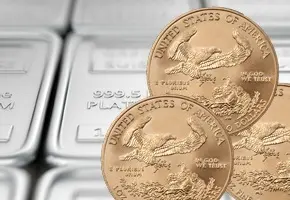
| American Silver Eagle | United States | .999 | Yes — statutory exemption |
| Canadian Silver Maple Leaf | Canada | .9999 | Yes |
| Austrian Silver Philharmonic | Austria | .999 | Yes |
| Australian Silver Kookaburra | Australia | .999 | Yes |
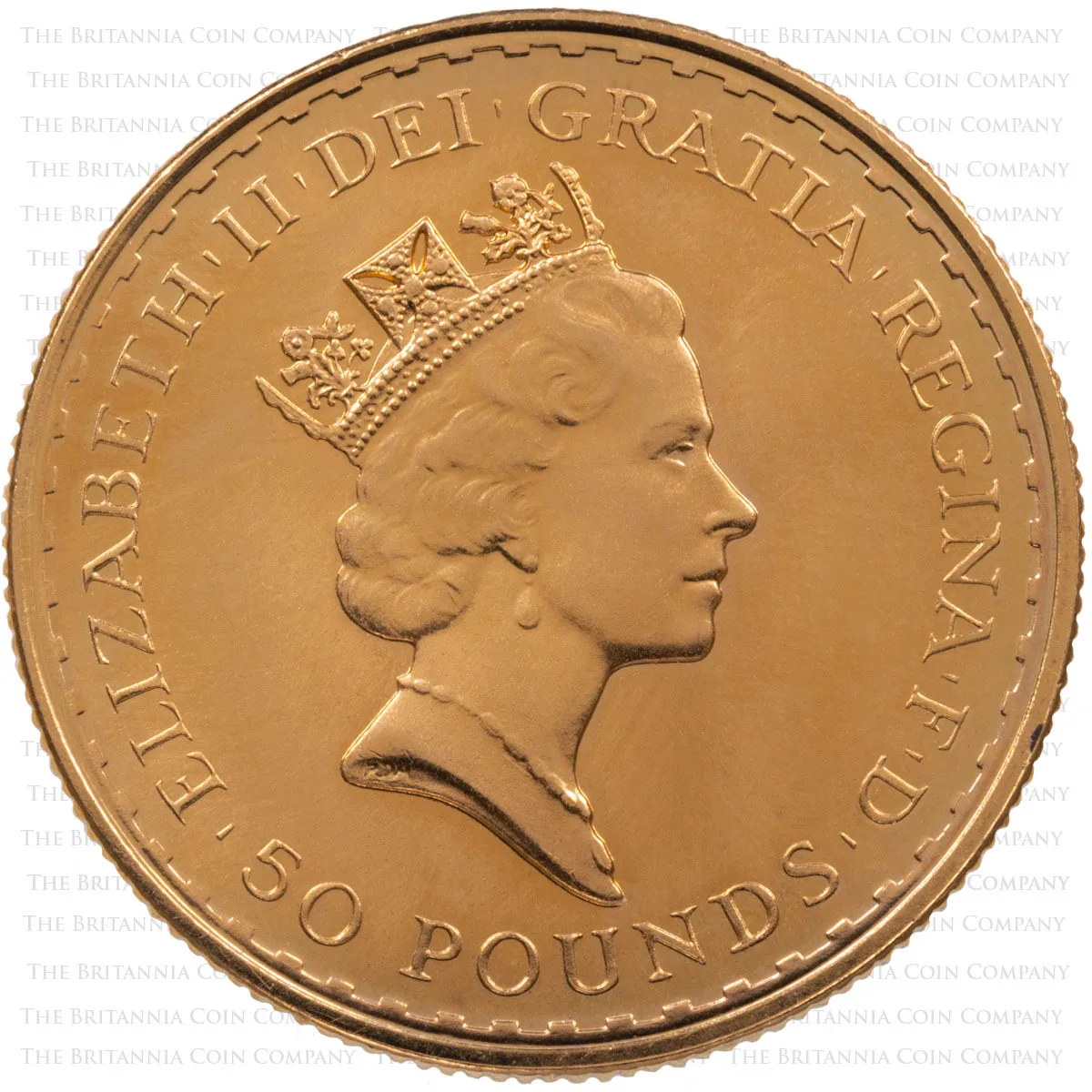
| British Silver Britannia | United Kingdom | .999 | Yes |
| Mexican Silver Libertad | Mexico | .999 | Yes |
IRS-Eligible Silver Bars
COMEX- or NYMEX-approved refiners must produce IRA-eligible silver bars with proper hallmarking indicating weight, purity, and refiner name. Approved refiners include Johnson Matthey, Engelhard, PAMP Suisse, Sunshine Minting, and Royal Canadian Mint. Common denominations are 1 oz, 10 oz, and 100 oz bars.
What Is NOT Eligible for a Silver IRA
- Pre-1965 U.S. coins — only 90% silver, below the .999 threshold
- Numismatic/collectible coins — classified as collectibles under IRC §408(m)
- Silver jewelry, art, or decorative items
- Silver ETFs or mining stocks — paper assets, not physical metal
- Bars from non-approved refiners without proper hallmarking
IRS Citation: IRC §408(m)(3)(B): "any silver of a fineness equal to or greater than that required of silver coins...". See also IRS Publication 590-A (2025), page 8.
How Does IRA Silver Work? The Complete Process Explained
A silver IRA works like any self-directed IRA — a custodian opens the account, manages compliance, and holds the assets in trust — except the assets are physical silver rather than stocks or mutual funds. Here is the exact sequence of events from account opening to storage.
Step 1: Choose a Qualified IRA Custodian
Not all banks or brokerage firms can hold physical precious metals. You need a specialty custodian approved to administer self-directed IRAs with alternative assets. Evaluate custodians on BBB rating, fee transparency, depository partnerships, years in business, and customer review scores. The custodian handles all IRS reporting (Form 5498 annually; Form 1099-R at distribution).
Step 2: Open and Fund the Account
Complete the custodian's application (typically online, 15–20 minutes). Fund via: (a) direct rollover from an existing 401(k) or IRA — tax-free, no dollar limit; (b) 60-day indirect rollover — must be completed within 60 calendar days or faces taxation; or (c) fresh contribution — up to $7,000/year ($8,000 if 50+). Most custodians process funding within 3–10 business days.
Step 3: Purchase IRS-Approved Silver
Your custodian connects you with an authorized precious metals dealer. You select IRS-eligible coins or bars. The custodian coordinates the purchase and payment — you never directly handle or pay for the metals yourself. Dealer premiums typically range from 2%–8% over spot price.
Step 4: Metals Shipped to Approved Depository
The dealer ships the purchased silver — fully insured — directly to an IRS-approved depository, where the custodian records receipt and the IRA takes legal ownership. You choose between segregated storage (your exact metals stored separately, identified by serial number) or commingled storage (pooled with other investors' equivalent metals). Segregated costs $100–$300/year more but guarantees you receive your exact metals at distribution.
Taking Distributions from a Silver IRA
At age 59½ or later, you may take distributions as: (a) cash equivalent — custodian sells your silver at current spot price and sends you the proceeds; (b) in-kind distribution — your physical silver is shipped to you, taxed as ordinary income at fair market value on the distribution date. Traditional IRA distributions are always taxed as ordinary income. Roth IRA qualified distributions are entirely tax-free.
How to Open a Silver IRA
Four steps to fund, purchase, and store IRS-approved silver in your retirement account
Research Companies
Compare top-rated IRA custodians and read reviews to find the best fit for your goals.
Open Your Account
Complete the application with your chosen custodian. Most offer guided setup assistance.
Fund via Rollover
Transfer funds from your existing 401(k) or IRA — tax-free with a direct rollover.
Select Your Metals
Choose IRS-approved silver, gold, platinum or palladium products for your portfolio.
Is a Silver IRA a Good Investment? Honest 2026 Analysis
A silver IRA is a good investment for retirement savers seeking inflation protection, portfolio diversification, and tangible asset exposure — but it has real drawbacks that make it unsuitable for every investor. The following analysis draws on historical silver price data, verified 2026 custodian fee schedules, and independent financial advisor guidance.
Why a Silver IRA May Be a Good Investment
- Inflation hedge: Silver has historically maintained purchasing power during high-inflation periods. During the 2021–2023 U.S. inflation surge, precious metals IRA demand reached record levels.
- Portfolio diversification: Silver has low to negative correlation with stock market returns, reducing overall portfolio volatility when held alongside equities and bonds.
- Tax-advantaged growth: A silver IRA accumulates gains tax-deferred (traditional) or tax-free (Roth), shielding appreciation from the 28% collectibles capital gains rate that applies to physical silver held outside an IRA.
- Tangible asset protection: Physical silver carries no counterparty risk — unlike stocks, bonds, or currency, it cannot go to zero and cannot be defaulted on.
- Industrial demand support: Silver has critical industrial applications in solar panels, electronics, and medical devices — providing demand support independent of monetary or speculative demand.
Risks and Drawbacks to Consider
- No income generation: Silver pays no dividends or interest — all return depends entirely on price appreciation.
- Fee drag: Storage, custodian, and dealer premiums add 1%–3% annually to the effective cost of ownership — a significant drag that compounds over time.
- High price volatility: Silver is significantly more volatile than gold. The gold-to-silver ratio has ranged from 30:1 to 125:1 historically, meaning silver can underperform dramatically during risk-off periods.
- Lower liquidity than equities: Selling physical silver takes 3–5 business days and involves dealer premiums not present in stock or ETF liquidation.
What Financial Advisors Recommend
Most independent financial advisors recommend limiting all precious metals to 5%–15% of a total retirement portfolio. Silver specifically is often recommended at 3%–8% of total assets — enough to benefit from diversification without excessive volatility exposure. The right allocation depends on your age, risk tolerance, existing portfolio composition, and retirement timeline. Investors closer to retirement typically reduce silver exposure due to its higher volatility relative to gold.
Silver IRA Fees: What You Will Actually Pay in 2026
Silver IRA investors pay fees at four points: account setup, annual custodian administration, annual storage, and at the point of purchase (dealer premium). Understanding all four components lets you accurately calculate and compare the total cost of ownership across companies before committing.
| Fee Type | Typical Range (2026) | Frequency | Notes |
|---|---|---|---|
| Account setup | $50 – $150 | One-time | Often waived for accounts over $25,000 |
| Annual custodian/admin | $75 – $300 | Annual | Flat fee or asset-based percentage |
| Segregated storage | $100 – $300/year | Annual | Your exact metals identified separately |
| Commingled storage | $50 – $150/year | Annual | Pooled with equivalent metals |
| Wire transfer | $25 – $50 | Per transaction | For funding the account |
| Dealer premium over spot | 2% – 8% | Per purchase | Lower for bars vs. coins |
| Shipping and insurance | $50 – $150 | Per shipment | To/from depository |
| Liquidation/closing fee | $0 – $250 | One-time at close | Varies widely — verify before opening |
How Much Is 1 Oz of Silver Right Now?
As of early 2026, silver spot price trades approximately $30–$35 per troy ounce. Check live spot prices at Kitco.com or APMEX.com for real-time data updated every 60 seconds. When purchasing IRA silver, the effective cost per ounce is higher: add the dealer's premium of 2%–8% over spot. For example, at $32/oz spot with a 5% dealer premium, you pay ~$33.60/oz. On a $10,000 investment, you would receive approximately 297 troy ounces of silver. Annual storage and custodian fees add roughly $0.50–$1.50 per ounce per year to the true ongoing cost.
How to Minimize Silver IRA Costs
- Compare complete fee schedules from at least 3 custodians before opening an account
- Negotiate setup fee waivers — most companies waive them for accounts above $25,000
- Choose commingled storage if asset segregation is not a critical priority
- Buy bars over coins when possible — bars carry lower dealer premiums over spot
- Verify buyback policies and liquidation fees explicitly in writing before committing
- Ask for a total all-in cost estimate for your specific planned account size
IRA-Eligible Silver Requirements
Silver IRA Rollover: Moving a 401(k) or IRA Tax-Free
A direct rollover from a 401(k), 403(b), TSP, or traditional IRA into a silver IRA is completely tax-free and penalty-free under IRC §402(c) and §408(d)(3). There is no dollar limit on direct rollovers. Most rollovers complete within 5–15 business days.
Direct Rollover (Trustee-to-Trustee) — Recommended
Your existing plan administrator sends funds directly to your new silver IRA custodian. No taxes withheld. No deadline. No annual frequency limit. This is the IRS-preferred method and eliminates all rollover risk. Your new custodian typically initiates the paperwork and communicates directly with your old plan on your behalf.
Indirect Rollover (60-Day Rule)
Your old custodian sends a check to you personally. You have exactly 60 calendar days to deposit the full amount into your new silver IRA — including the 20% automatically withheld for federal income taxes (you must make up this 20% from your own funds to avoid a partial taxable distribution). The IRS allows only one indirect rollover per 12-month period across all your IRAs combined. Miss the 60-day window and the entire amount becomes a taxable distribution, plus a 10% early withdrawal penalty if you are under 59½.
Eligible Source Accounts for a Silver IRA Rollover
- Traditional IRA, SEP IRA
- SIMPLE IRA (after mandatory 2-year waiting period)
- 401(k) — upon leaving employer or reaching in-service withdrawal eligibility
- 403(b), 457(b), Thrift Savings Plan (TSP)
- Roth IRA (only to a Roth silver IRA — cannot commingle Roth and traditional funds)
Documentation to Keep
Retain your rollover documentation for at least 6 years: the distribution statement from your old custodian plus the deposit confirmation from your new custodian. The IRS requires custodians to report rollovers on Form 5498, Box 2. If the 60-day deadline was missed due to circumstances beyond your control (hospitalization, natural disaster, bank error), apply for a self-certification waiver under Rev. Proc. 2020-46.
Silver IRA vs. Gold IRA: Key Differences
Silver and gold IRAs share the same legal structure under IRC §408(m) but differ significantly in spot price, volatility, industrial demand, and storage cost per dollar invested. Understanding these differences helps you decide whether to open a silver IRA, a gold IRA, or hold both metals in a combined precious metals IRA.
| Factor | Silver IRA | Gold IRA |
|---|---|---|
| Spot price per oz (2026 est.) | ~$30–$35 | ~$2,800–$3,200 |
| IRS minimum purity | .999 fine | .995 fine |
| Annual price volatility | Higher (±30–50%) | Lower (±15–25%) |
| Industrial demand share | ~50% of annual supply | ~10% of annual supply |
| Storage cost per $10,000 invested | Higher (bulkier, heavier) | Lower (compact, dense) |
| Gold-to-silver ratio (2026) | ~85:1 (historically ranges 60:1 to 90:1) | |
| Liquidity | Excellent | Excellent |
| Minimum IRA investment | $5,000 – $25,000 | $5,000 – $50,000 |
When Silver May Outperform Gold
Silver tends to outperform gold during industrial expansion cycles and solar energy growth periods. When the gold-to-silver ratio is historically elevated (above 80:1), silver historically mean-reverts by outperforming gold. Silver's smaller market capitalization also means it can move faster and further in precious metals bull markets.
When Gold May Be Preferable
Gold outperforms silver during economic uncertainty, recession, and "flight to safety" demand spikes. Gold's lower volatility and lower storage cost per dollar make it more appropriate for conservative investors approaching or in retirement.
Combined approach: Many financial advisors recommend holding both metals — a 60% gold / 40% silver allocation within the precious metals portion of a retirement portfolio — capturing gold's stability while benefiting from silver's growth potential and industrial demand support.
Silver IRA Tax Rules: How IRA Silver Is Taxed
The tax treatment of silver inside an IRA is fundamentally different from silver held outside an IRA — and this difference is one of the primary financial reasons to hold silver inside a retirement account rather than in a personal brokerage or at home.
Traditional Silver IRA: Tax Treatment
- Contributions: Pre-tax; may be deductible depending on income and workplace plan participation
- Growth: Tax-deferred — no capital gains tax on appreciation while metals remain inside the IRA
- Distributions: Taxed as ordinary income at your marginal rate (10%–37%) — not at the 28% collectibles rate that applies to silver sold outside an IRA
- Early withdrawals (before 59½): Ordinary income tax + 10% penalty on the full distribution amount
- Required minimum distributions: Begin at age 73 under the SECURE 2.0 Act
Roth Silver IRA: Tax Treatment
- Contributions: After-tax only (no deduction at contribution time)
- Growth: Completely tax-free while inside the account
- Qualified distributions: 100% tax-free if account is 5+ years old and you are 59½ or older
- No RMDs during the account owner's lifetime
Key Tax Advantage: Avoiding the 28% Collectibles Rate
Physical silver held outside an IRA is taxed as a collectible under IRC §1(h)(5), with a maximum long-term capital gains rate of 28% — significantly higher than the standard 15%–20% long-term capital gains rate on stocks and most other investments. By holding silver inside a traditional IRA, your gains are taxed as ordinary income at distribution — and for investors in the 22% or 24% bracket, that can be a meaningful tax saving. Inside a Roth IRA, the advantage is even greater: zero tax on all appreciation, regardless of how much silver prices increase.
How to Choose the Best Silver IRA Company in 2026
The single most important decision in opening a silver IRA is selecting the right company. Your choice determines your fees, depository options, customer support quality, buyback terms, and educational resources — all of which directly affect your long-term experience and net returns.
7 Essential Criteria for Evaluating Silver IRA Companies
- BBB Rating: Look for A+ or A from the Better Business Bureau. Check the full complaint history, not just the letter grade — patterns of unresolved complaints are a red flag regardless of overall rating.
- Fee transparency: All fees — setup, annual custodian, storage, dealer premiums, and liquidation — must be disclosed in writing before account opening. Legitimate companies provide complete fee schedules upon request. Avoid any company that is vague or evasive about costs.
- Depository partnerships: Top companies partner with Delaware Depository, Brink's Global Services, STRATA Trust Company, or International Depository Services (IDS) — all IRS-approved, FDIC-backed where applicable, and fully insured against theft and damage.
- Buyback guarantee: The best companies formally commit to repurchasing your metals at competitive prices with no liquidation penalty. This matters enormously when you take distributions or need to liquidate.
- Minimum investment requirement: Ranges from $5,000 (Noble Gold) to $50,000 (Augusta Precious Metals). Match the minimum to your available capital — do not invest borrowed money or money you cannot afford to tie up.
- Educational resources: Top companies provide free IRA information kits, one-on-one consultations with non-commissioned specialists, market education materials, and dedicated account representatives — not just a sales process.
- Track record: Companies with 10+ years in the precious metals IRA industry and thousands of independently verified customer reviews carry significantly lower risk than newer market entrants.
Red Flags to Avoid
- High-pressure sales tactics or urgency-creating language about imminent economic collapse
- Vague, unavailable, or inconsistently stated fee schedules
- Home storage IRA promotions — the IRS has explicitly ruled these constitute prohibited transactions under IRC §4975
- Promises of guaranteed returns or "risk-free" silver investments — prices fluctuate and no precious metals investment carries a guaranteed return
- Companies without a verifiable BBB listing or with multiple unresolved BBB complaints within the past 3 years